
Why Radon Levels Change From Room to Room — And When One Test Isn’t Enough

Radon levels can vary between rooms, floors, and times of day. Factors such as where radon enters the home, airflow, ventilation, pressure changes, and building conditions can all affect indoor readings.
A properly placed radon test can provide important information about your home. But when you want to understand how radon behaves in different living spaces, room-by-room monitoring can reveal patterns that a single location may not show.
Why Radon Levels Vary Throughout the Same House
Radon enters homes through openings such as cracks, construction joints, sump openings, and gaps around pipes. These entry points are not distributed evenly throughout a building.
Air movement can also affect how radon moves between rooms. Ventilation, HVAC systems, doors, pressure differences, and weather conditions can all contribute to changing readings.
That means two rooms in the same home may record different radon levels at the same time.
Can Radon Levels Change From Floor to Floor?
Yes. Lower levels that are in contact with the ground are often important places to test because radon can enter from the surrounding soil. However, the appropriate testing location depends on how the home is used.
For example, a finished basement, bedroom, family room, or home office may be more relevant than an unoccupied storage area. Health Canada recommends testing normal occupancy areas on the lowest lived-in level, while CDC guidance similarly recommends the lowest level used regularly.
This is why where you test matters just as much as what you test with.
Why Radon Readings Can Change During the Day
Radon is not constant indoors. Readings can change with ventilation, weather, pressure, HVAC operation, and household activity.
A reading that is lower during one part of the day does not necessarily represent the home's longer-term average. Longer measurements provide a better understanding of typical radon conditions, while shorter measurements can help identify changes and trends.
This is one reason continuous radon monitoring can be useful when you're trying to understand patterns rather than relying on a single number.
When Should You Test More Than One Room?
A single properly conducted test can be appropriate for initial home testing. But additional locations may be useful when:
-
You want to compare different floors or frequently occupied rooms.
-
You are using a basement, bedroom, or other lower-level space more often.
-
Your home has unusual airflow or ventilation patterns.
-
You want to investigate differences between rooms.
-
You want to understand how radon changes over time and between locations.
The goal is not simply to collect more numbers. It is to understand where and when radon levels change.
How to Test Radon Room by Room
If you are using a portable electronic radon monitor, a simple room-by-room approach can help organize your measurements:
1. Choose the location
Start with an appropriate, frequently occupied area and follow the manufacturer's placement instructions.
2. Keep the monitor in place
For EcoQube Flex, Ecosense recommends monitoring one location for 2–7 days before moving to another room.
3. Save the location's data
Record the room and floor so you can understand where the measurement came from.
4. Compare the results
Look for differences between rooms, daily fluctuations, and patterns that may warrant further testing or professional advice.
For longer-term assessment, tests lasting more than 90 days can provide a better indication of average radon levels over time.
EcoQube Flex™ Makes Room-by-Room Monitoring Easier
Moving one monitor from room to room can become difficult if measurements are not saved and organized properly. That's where EcoQube Flex can help.
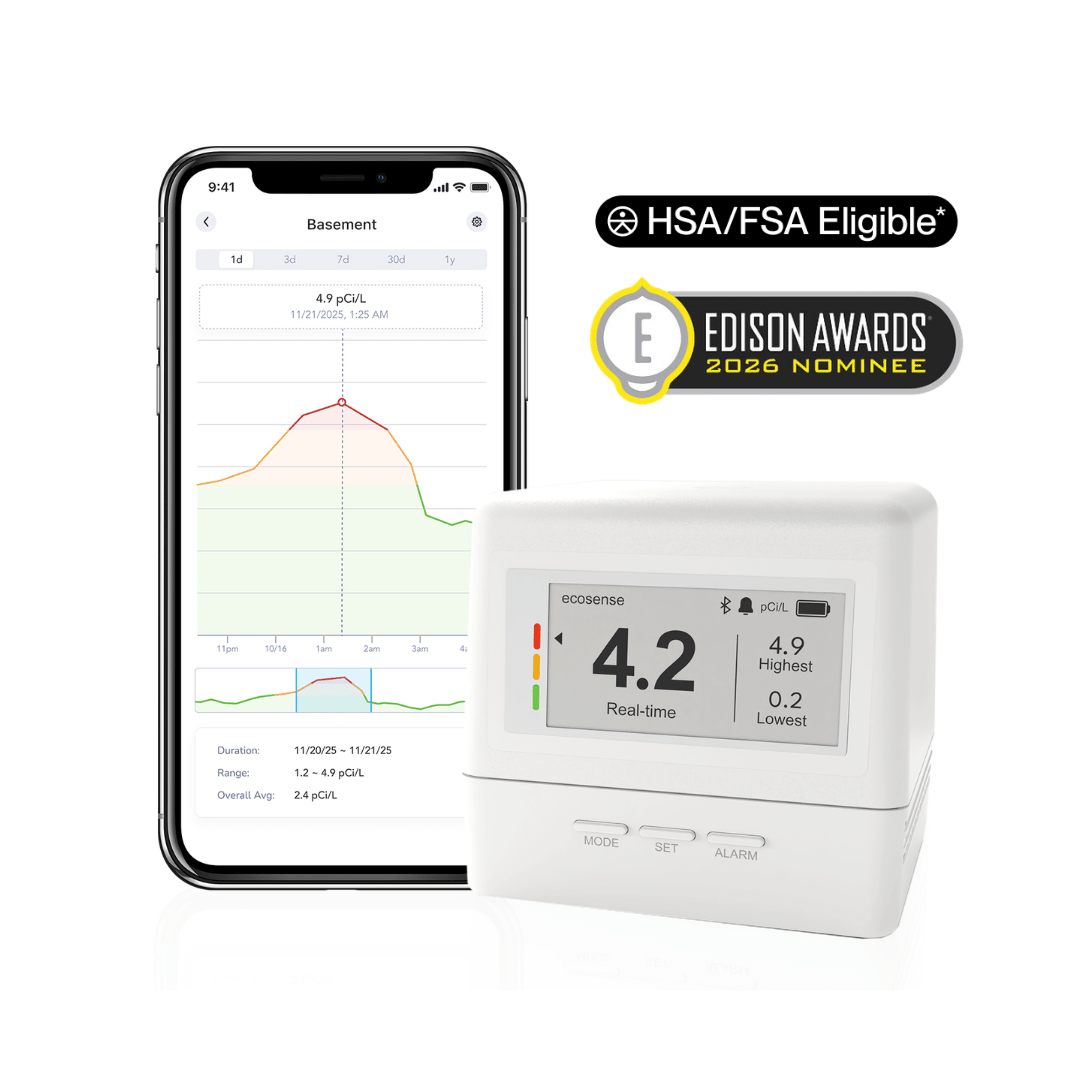
EcoQube Flex allows you to move the device between locations while keeping measurement histories associated with individual places in the Ecosense app. You can review previous readings and compare locations without relying on handwritten notes or screenshots.
The monitor also displays current, highest, and lowest readings, while the app provides historical data and trend views.
Want to understand radon levels throughout your home?
The Bottom Line: Radon Is Room- and Time-Specific
Radon should not be viewed as a completely fixed number throughout a home. Indoor levels can change because of building conditions, airflow, ventilation, weather, and time.
A properly conducted test gives you valuable information. Room-by-room monitoring can provide additional insight when you need to understand how conditions differ across living spaces.
With EcoQube Flex, homeowners can organize room-specific measurements in one app and make it easier to see how radon behaves throughout the home.
Frequently Asked Questions
1. Why do radon levels change from room to room?
Radon enters through different parts of a building and is affected by airflow, ventilation, pressure, and other building conditions. As a result, readings can differ between rooms.
2. Are radon levels always highest in the basement?
Not necessarily. Lower ground-contact areas are important testing locations, but the appropriate location also depends on where people regularly spend time.
3. How long should I test radon in one room?
For EcoQube Flex, Ecosense recommends keeping the monitor in one location for 2–7 days before moving it. Longer-term testing provides deeper insight into average conditions over time.
4. Can I move my radon monitor between rooms?
Yes. With EcoQube Flex, Place Management allows you to create separate monitoring sessions and keep the historical data for each location organized in the app.